Exercise for Older Adults: What Few People Talk About
STEEL Team
April 3, 2026

When it comes to exercise for older adults, most people think of gentle movements, basic exercises, or simply working out to maintain health. But there’s one crucial point that’s often overlooked: at this stage of life, what older adults truly need isn’t exercises to show off strength, nor impressive milestones or personal records. What they really need is a sense of safety and confidence in every movement of their bodies.
As we age, the biggest concern isn’t just that our bodies weaken. Even more important is the feeling that we no longer fully control movements that were once second nature. A simple act of sitting down and standing up, a small misstep, or a fleeting ache in the knees, back, or hips can make someone hesitant to move every day.
Over time, this decline often doesn’t start with physical strength. On the contrary, it begins when a person gradually loses trust in their own body.
For older adults, a proper workout doesn’t start with lifting heavier or trying to do more. It begins with carefully observing the body: identifying weak points, areas lacking stability, and what needs support before thinking about progress.
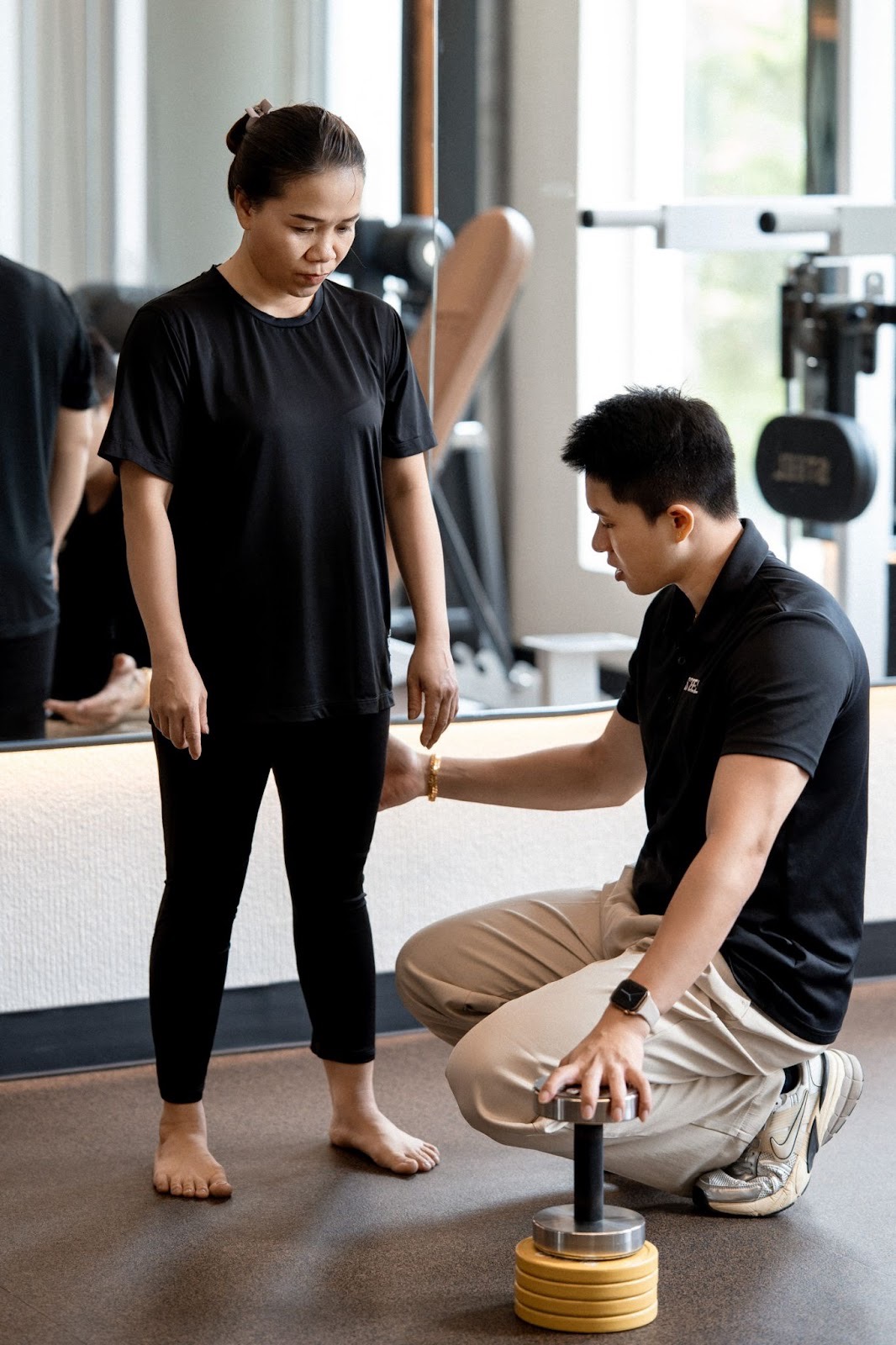
As we age, our bodies change in ways we might not notice. Knees may feel less steady, the spine may need more support, and balance and coordination slow down bit by bit. Even breathing matters, because it affects how well we move and how our body protects itself.
Understanding these factors makes exercise for older adults much safer. That’s why, in older adult sessions at STEEL, Coach Tăng Minh doesn’t start with pressure to progress quickly. Instead, he begins by carefully observing each movement, noticing even the smallest changes in the body, and then adjusting exercises in the most suitable way for each individual. By building a solid foundation from the start, training becomes safe today and helps restore confidence and independence over time.
Young people often exercise to improve appearance, hit milestones, or push past limits. For older adults, exercise has a different purpose.
It’s about staying in control of daily life. Being able to stand and sit confidently, move without losing balance, or bend to pick something up without hesitation. These simple actions may seem minor, but they are the very foundation of independence, freedom, and a life lived fully.
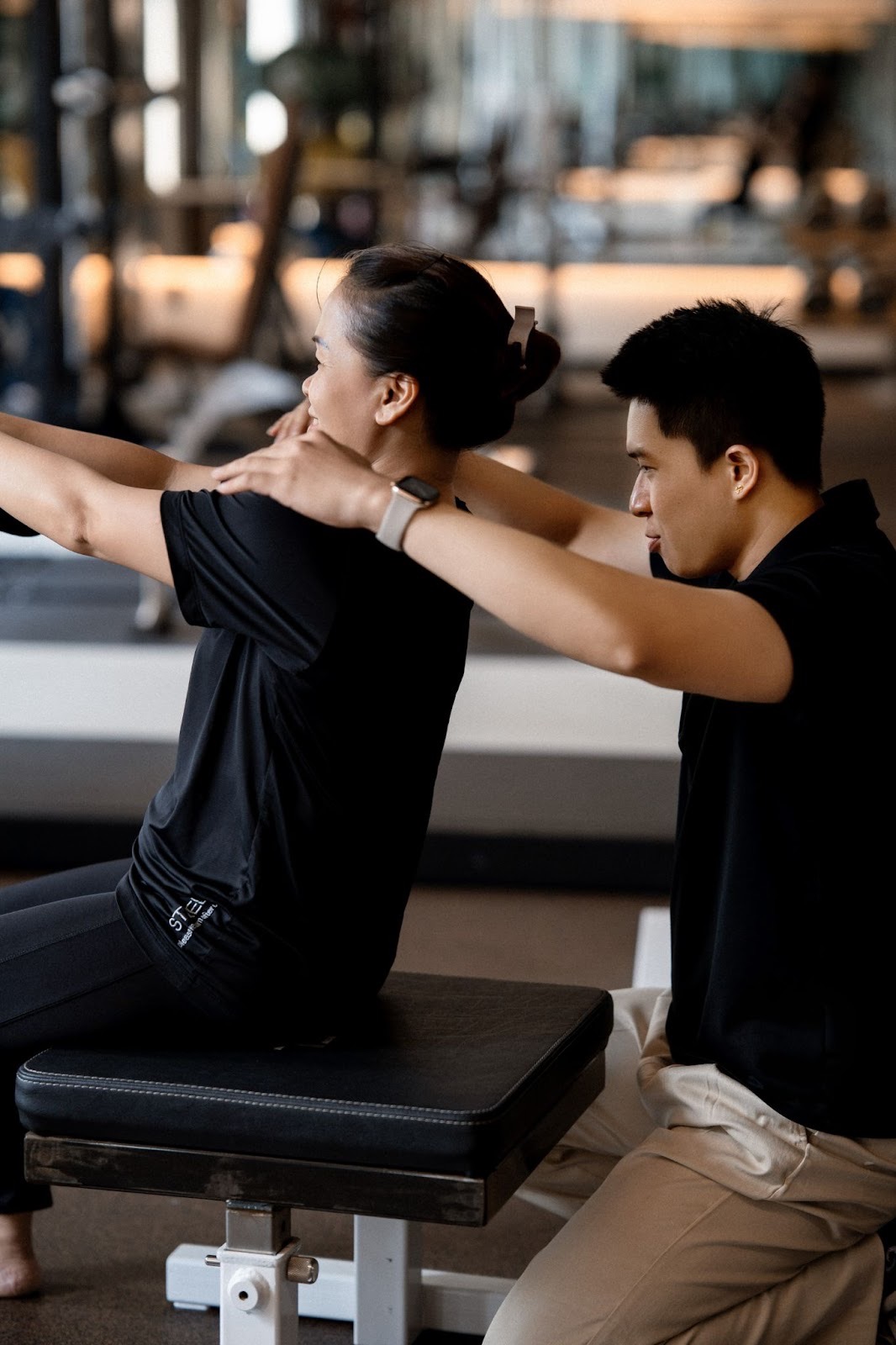
Getting back a solid foundation isn’t just about “moving more.” It requires a clear plan, science-backed structure, and patience for the body to adapt. Coach Tăng Minh bases his programs on four key pillars:
1. Foundational Strength: The goal isn’t heavy lifting, but strengthening the muscles that support daily life, especially glutes, core, and the back chain. When these foundations improve, the ability to stand, sit, walk, and maintain stability changes noticeably.
2. Balance: Training body awareness (proprioception) in space helps the nervous system respond more effectively to movement, significantly reducing the risk of imbalance and falls.
3. Tempo & Breathing: Optimizing precise breathing techniques helps limit unnecessary stress on the cardiovascular system, spine, and joints. When tempo is managed well and breathing is guided correctly, every movement becomes safer.
4. Progressive Overload: The body can still gain strength at any age, as long as it is guided properly. Progress at this stage doesn’t come from rushing or ego; it’s built through science, patience, and careful observation at every stage of training.
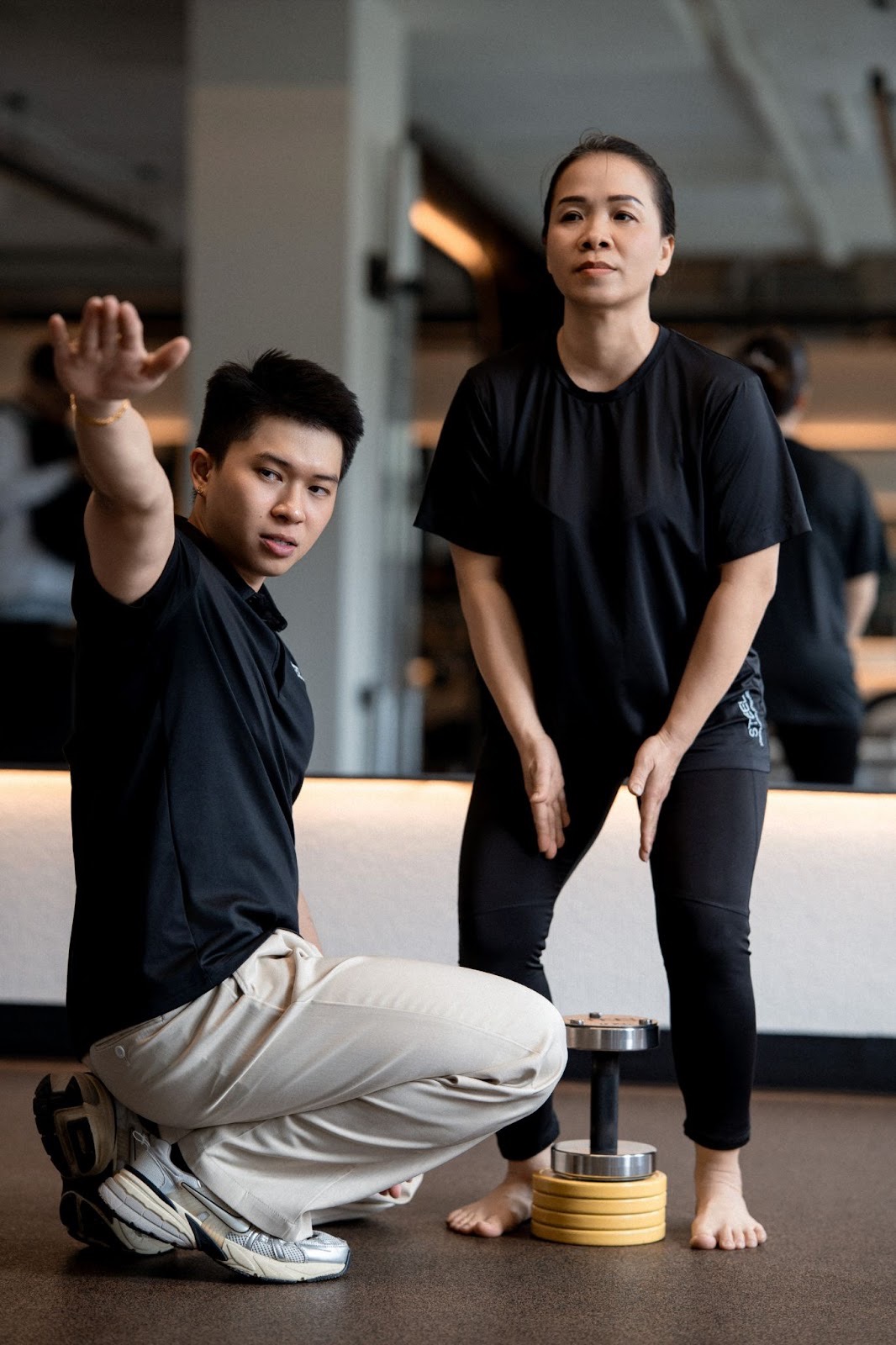
For older adults, progress isn’t measured by impressive numbers. Instead, it reveals itself in simple yet meaningful moments.
Maybe it’s squatting a bit deeper without losing balance. Maybe it’s lifting a bar without shaky hands. Or simply moving in a way that once felt uncertain, now feels steady and natural.
From the outside, it may seem like just a better workout. But for them, it means their body is coming back and their confidence is growing again, little by little. Sometimes, these small wins are the biggest results of all.
Many people see exercise at an older age as a fight against aging. But it’s not.
Healthy aging isn’t about trying to keep a younger body. It’s about preparing for the years ahead, so the body stays strong, stable, and flexible enough to live independently and confidently every day.

